Commercial development requires more than building design, parking layouts, and utility connections. Proper drainage planning is equally important because stormwater runoff can affect site accessibility, surrounding properties, infrastructure, and long-term building performance. Without an effective drainage system, even a well-planned commercial development may experience water accumulation, erosion, or flooding during heavy rainfall.
For developers planning commercial properties in Texas, understanding drainage requirements early in the project can help prevent design complications and approval delays. Local drainage criteria, existing site conditions, rainfall patterns, and floodplain considerations all influence how stormwater must be managed.
GGE Consulting Engineers provides civil engineering and land development services that support commercial projects throughout South Texas. Understanding the requirements for drainage engineering in Texas helps property owners and developers make informed decisions before construction begins.
Why Is Drainage Engineering Important for Commercial Developments?
Drainage engineering is the process of evaluating how stormwater moves across a property and designing systems that collect, control, and direct runoff safely. Commercial developments often introduce buildings, parking areas, driveways, sidewalks, and other impervious surfaces that reduce the amount of rainwater naturally absorbed into the ground.
As impervious coverage increases, more stormwater flows across the property. Without proper planning, runoff can collect around buildings, enter parking areas, damage landscaping, or affect neighboring properties.
A properly designed drainage system helps commercial developers:
- Reduce the risk of standing water and localized flooding.
- Protect building foundations and paved surfaces.
- Control stormwater runoff from impervious areas.
- Maintain safe access for pedestrians and vehicles.
- Reduce erosion around drainage channels and outfalls.
- Address applicable municipal drainage requirements.
- Support long-term site functionality and maintenance.
Drainage engineering should be considered during the initial site planning stage rather than after the building layout has been finalized. Early coordination allows engineers to evaluate drainage requirements alongside grading, utilities, access, and other development improvements.
Major Drainage Engineering Requirements in Texas
Commercial drainage requirements vary depending on the property’s location, development characteristics, existing drainage conditions, and applicable local regulations. Developers must evaluate the entire site to determine how stormwater should be managed.
The following are important considerations when planning commercial drainage infrastructure.
1. Existing Site Conditions and Topographic Survey
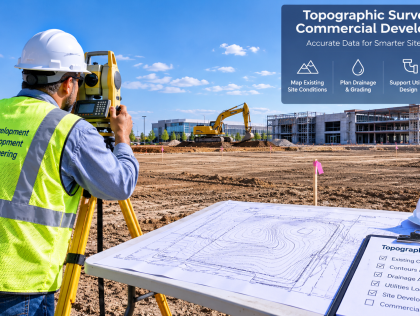
Before preparing drainage plans, engineers need accurate information about the existing property. A topographic survey documents ground elevations, slopes, drainage paths, structures, pavement, and other physical features.
This information helps engineers understand how water currently moves across the property and identify potential drainage constraints.
A topographic survey may document:
- Existing ground elevations and contours.
- Natural drainage channels and low-lying areas.
- Existing buildings and paved surfaces.
- Drainage structures and visible outfalls.
- Adjacent roadways and property conditions.
- Relevant easements and site features.
Accurate survey information provides the foundation for grading plans, drainage calculations, and stormwater system design.
GGE Consulting Engineers provides land surveying services that support engineering design by documenting existing property conditions. Coordinating survey information with civil engineering helps reduce inconsistencies during project planning.
2. Stormwater Runoff Calculations
Stormwater runoff calculations help determine how much rainwater a developed property may generate during a design storm.
Commercial developments typically contain a combination of rooftops, parking areas, sidewalks, driveways, landscaped areas, and other surfaces. Each surface contributes differently to runoff.
Engineers evaluate several factors, including:
- Total drainage area.
- Existing and proposed land use.
- Impervious surface coverage.
- Ground slope and topography.
- Soil characteristics and infiltration conditions.
- Rainfall intensity and applicable design storm criteria.
- Existing drainage patterns.
Hydrologic calculations help determine the expected runoff generated by the proposed development. This information supports the sizing and configuration of drainage infrastructure.
For developments in South Texas, engineers must also consider applicable local drainage criteria and review requirements. The analysis should reflect the standards established by the relevant reviewing authorities.
3. Storm Drainage System Design
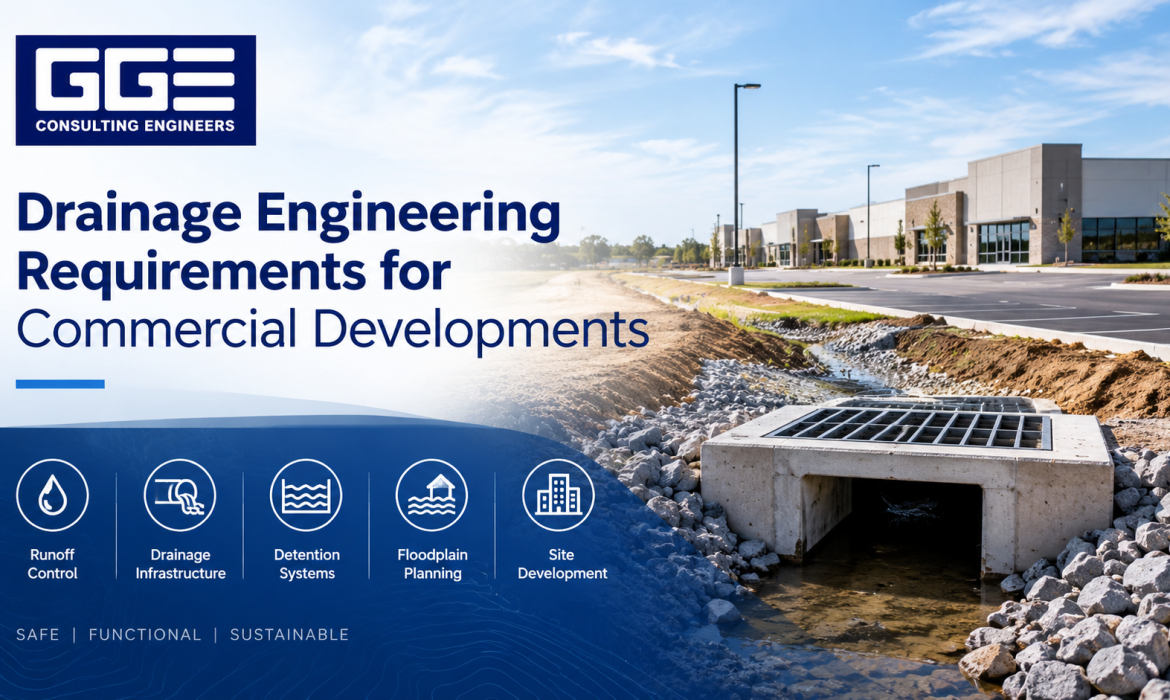
A storm drainage system collects and conveys stormwater from different parts of a development toward an approved discharge location.
The system must be designed to handle the expected runoff while considering site elevations, pipe capacity, inlet locations, and downstream conditions.
Common storm drainage components include:
| Drainage Component | Primary Function |
| Storm drain inlets | Collect surface runoff from paved areas |
| Storm sewer pipes | Convey collected stormwater |
| Manholes | Provide access for inspection and maintenance |
| Culverts | Allow water to pass beneath roads or other improvements |
| Drainage channels | Carry stormwater through designated flow paths |
| Outfall structures | Control discharge from drainage systems |
| Detention facilities | Temporarily store stormwater runoff |
Proper coordination between these components helps maintain effective stormwater movement throughout the property.
Engineers must evaluate pipe slopes, hydraulic capacity, inlet placement, and discharge conditions to ensure the proposed system performs as intended.
4. Detention Pond and Stormwater Storage Requirements
Detention facilities are commonly used in commercial developments to temporarily store stormwater runoff and control discharge from a site.
When development increases impervious coverage, the amount and timing of runoff may change. Detention design helps manage these changes by temporarily holding stormwater and releasing it through a controlled outlet.
A detention system may include:
- A designated storage area.
- An inlet and outlet arrangement.
- An outlet control structure.
- Emergency overflow provisions.
- Access for inspection and maintenance.
- Appropriate grading and erosion protection.
Engineers evaluate the required storage volume using hydrologic calculations and applicable local criteria. They also consider the available site area, proposed grading, downstream drainage conditions, and maintenance requirements.
The detention facility must be coordinated with the overall site layout. Its location should not interfere with building placement, parking circulation, utility corridors, or other development improvements.
5. Site Grading and Surface Drainage
Site grading plays an important role in controlling stormwater movement. Even when a development includes underground storm drainage infrastructure, surface grading must direct runoff toward appropriate collection points.
Poor grading can create low areas where water accumulates around buildings, sidewalks, parking spaces, and access drives.
A commercial grading plan generally addresses:
- Proposed ground elevations.
- Building pad elevations.
- Parking lot slopes.
- Sidewalk and driveway grades.
- Surface drainage flow directions.
- Drainage swales and collection points.
- Transitions between developed and undeveloped areas.
The grading design must also coordinate with accessibility requirements, pavement design, building elevations, and utility installations.
GGE’s civil engineering services include site grading, drainage design, and infrastructure planning for commercial and public development projects.
Stormwater Drainage Engineering in Texas: Local Considerations
Texas developments must account for regional rainfall patterns, existing watershed conditions, local drainage standards, and the characteristics of the development site.
Stormwater drainage engineering in Texas requires a project-specific approach because drainage conditions can differ significantly between municipalities and counties.
Stormwater Drainage Design in San Antonio
Commercial development in San Antonio requires careful consideration of local drainage criteria and existing watershed conditions.
Developers must evaluate how proposed improvements affect runoff, drainage infrastructure, and downstream properties. The design should address both the property’s internal drainage system and its connection to the receiving drainage network.
Important considerations include:
- Applicable City of San Antonio drainage criteria.
- Existing watershed and drainage patterns.
- Required hydrologic and hydraulic calculations.
- Detention and discharge requirements.
- Floodplain and floodway considerations.
- Drainage easements and outfall locations.
- Coordination with applicable reviewing agencies.
A stormwater drainage design in San Antonio should be developed using accurate survey information and engineering calculations that support the proposed site improvements.
Floodplain and Floodway Evaluation
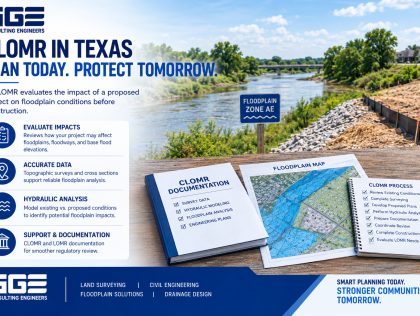
Some commercial properties are located within or near FEMA-designated flood hazard areas. These conditions can affect building placement, grading, drainage infrastructure, and development approvals.
Engineers may need to evaluate floodplain boundaries, base flood elevations, existing watercourses, and proposed improvements to understand potential impacts.
Depending on the project, additional floodplain engineering documentation may be required.
This may include:
- Floodplain analysis.
- Hydraulic modeling.
- Floodway impact evaluation.
- CLOMR documentation.
- LOMR applications.
- Coordination with local floodplain administrators.
How Drainage Engineering Supports the Commercial Development Process
Drainage design is connected to several other engineering activities. Treating it as a separate task can create coordination problems when grading, utilities, building locations, and roadway improvements are developed independently.
An integrated engineering approach helps address these requirements together.
Coordination With Site Development Plans
Drainage infrastructure must fit within the overall site development plan. Engineers coordinate drainage systems with building footprints, parking areas, access drives, utility corridors, and landscaping.
For example, storm sewer lines should not conflict with water and wastewater utilities. Detention facilities must also be positioned where they can function without interfering with essential site improvements.
Working with an experienced site development civil engineering firm helps coordinate these elements before construction drawings are finalized.
Utility and Infrastructure Coordination
Storm drainage systems frequently share limited underground space with water distribution, sanitary sewer, electrical, and other utility infrastructure.
Engineers must consider horizontal and vertical separation, utility crossings, access requirements, and existing connections.
Proper coordination helps identify conflicts before construction begins and reduces the likelihood of design revisions.
Construction Planning and Implementation
Once drainage plans are approved, the construction team must install the system according to the engineering documents.
Construction coordination helps verify that drainage structures, pipes, grading elevations, and other improvements are installed in their intended locations.
GGE also provides construction management services, supporting coordination and oversight during project implementation.
Common Drainage Engineering Mistakes Developers Should Avoid
Drainage problems often begin during early planning when existing site conditions or downstream drainage constraints are not properly evaluated.
Avoiding common mistakes can improve project coordination and help developers address engineering requirements before construction.
| Common Mistake | Potential Impact |
| Using incomplete topographic information | Inaccurate drainage calculations and grading |
| Ignoring existing drainage patterns | Unexpected runoff movement |
| Underestimating impervious coverage | Insufficient stormwater management |
| Poor detention facility planning | Inadequate stormwater storage |
| Overlooking downstream conditions | Potential drainage impacts beyond the site |
| Failing to coordinate utilities | Conflicts during construction |
| Delaying drainage analysis | Design revisions and approval delays |
| Ignoring maintenance access | Difficulties maintaining drainage infrastructure |
Developers can reduce these risks by involving civil engineers during the initial planning stage.
A coordinated review of survey data, grading, drainage calculations, utilities, and regulatory requirements helps establish a stronger foundation for commercial development.
Key Documents Required for Commercial Drainage Engineering
The documents required for a commercial drainage project depend on the property, project scope, and reviewing jurisdiction.
However, several technical documents are commonly used during drainage planning and design.
These may include:
- Boundary and topographic survey: Documents property limits, elevations, and existing site conditions.
- Existing conditions plan: Shows current improvements, drainage features, and relevant site information.
- Drainage area map: Identifies the areas contributing runoff to different collection points.
- Hydrologic calculations: Estimates stormwater runoff under applicable design conditions.
- Hydraulic calculations: Evaluates the capacity and performance of drainage infrastructure.
- Grading and drainage plans: Illustrates proposed elevations, slopes, and stormwater flow paths.
- Detention calculations: Supports the design of required stormwater storage facilities.
- Drainage details: Provides construction information for inlets, pipes, outlets, and other drainage structures.
Depending on local requirements, additional reports, supporting exhibits, or floodplain documentation may also be necessary.
Complete and coordinated engineering documents help reviewers understand how the proposed development will manage stormwater.
Choosing the Right Engineering Partner for Commercial Drainage Design
Selecting an experienced engineering partner is an important part of commercial development planning. Drainage engineering requires knowledge of hydrology, hydraulics, grading, infrastructure design, and applicable local requirements.
Developers should evaluate whether an engineering firm can coordinate drainage design with the other technical requirements of the project.
Important factors to consider include:
- Experience with commercial site development.
- Understanding of Texas drainage requirements.
- Knowledge of municipal review and approval processes.
- Ability to prepare hydrologic and hydraulic calculations.
- Experience with detention and stormwater infrastructure.
- Access to accurate land surveying information.
- Coordination with utility and grading design.
- Professional oversight throughout project development.
A civil engineer land development in Texas should understand how drainage requirements influence the complete development process, from initial site evaluation through construction.
GGE Consulting Engineers provides integrated civil engineering, structural engineering, land surveying, and construction-related services. The firm supports commercial and public-sector projects throughout South Texas, with experience in site development, stormwater drainage, and floodplain engineering.
Conclusion
Drainage planning is an essential part of successful commercial development in Texas. From existing-condition surveys and runoff calculations to storm sewer systems, detention facilities, and floodplain evaluations, every component must work together to manage stormwater effectively.
GGE Consulting Engineers provides civil engineering and land surveying solutions that support commercial development throughout South Texas. Whether your project requires drainage analysis, stormwater system design, site grading, or floodplain evaluation, professional engineering coordination can help move your development forward.
Planning a commercial development project? Contact us at GGE Consulting Engineers to discuss your drainage engineering and site development requirements in Texas.
Frequently Asked Questions
What is drainage engineering in commercial development?
Drainage engineering involves evaluating stormwater runoff and designing systems to collect, convey, store, and discharge water safely. It helps protect commercial buildings, parking areas, infrastructure, and surrounding properties.
Why is drainage engineering important in Texas?
Texas developments must consider rainfall patterns, watershed conditions, local drainage requirements, and floodplain risks. Proper drainage engineering helps manage runoff and supports compliance with applicable development standards.
What is included in a commercial stormwater drainage design?
A commercial stormwater drainage design may include drainage area calculations, storm sewer pipes, inlets, culverts, channels, detention facilities, outlet structures, and grading plans.
Is a detention pond required for every commercial development?
No. Detention requirements depend on local regulations, site conditions, drainage characteristics, and the proposed development. Engineers evaluate the project to determine the appropriate stormwater management approach.
When should developers hire a drainage engineer?
Developers should involve a drainage engineer during the initial site planning stage. Early engineering evaluation helps identify drainage constraints, coordinate grading and utilities, and address applicable approval requirements before construction.