
OFFICE HOURS
Contact us:
- Mon–Fri: 08:00–17:00
OUR BROCHURES
Pavement Assessment

Service overview
GGE Consulting Engineers provides PE-led pavement assessments for roads, private airfields, and parking lots, throughout San Antonio, Bexar County, and South Texas. Every assessment is personally overseen by a Professional Engineer. That public works depth informs every GGE pavement assessment: the findings reflect not just surface observation, but engineering understanding of why South Texas pavements fail — and what it actually costs to fix them correctly.

THE details
All our services are driven by three core values: Integrity, accountability and reliability. Our Pavement Assessment Services are amongst the best in the industry across the Austin-San Antonio metroplex and South Texas.
Know the Condition of Every Surface Before It Fails.
Cracking Distress
The most common and diagnostic category of pavement distress — each crack pattern reveals a distinct failure mechanism with a different repair requirement and urgency.
- Alligator (fatigue) cracking — structural base failure
- Block cracking — thermal cycling and aging binder
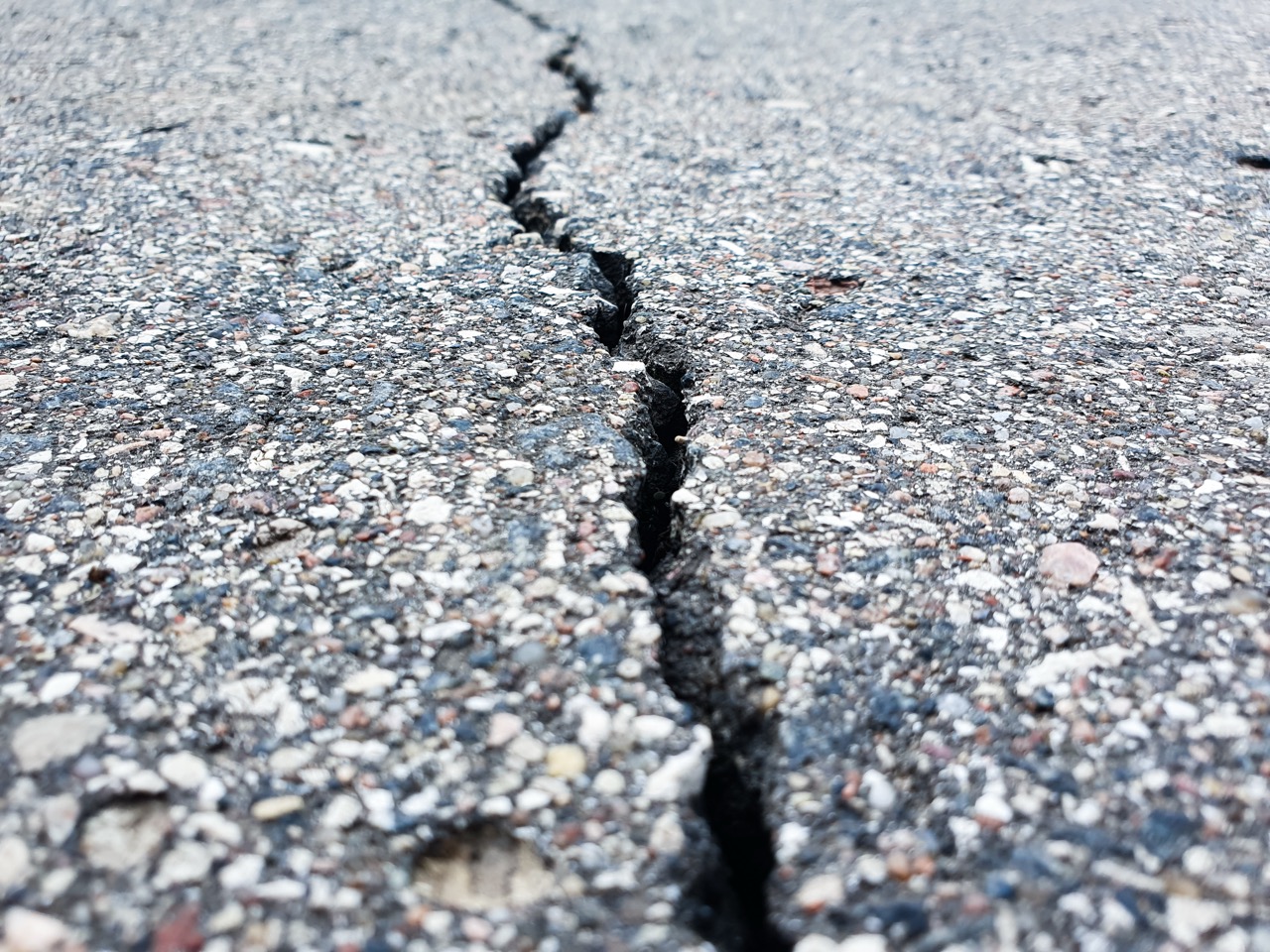
- Longitudinal cracking — lane joint or base settlement
- Transverse cracking — thermal contraction or reflection
- Edge cracking — lateral support loss at pavement margin
- Slippage cracking — bond failure between pavement layers
Surface Deformation Distress
Deformation distresses indicate structural inadequacy — the pavement section is no longer capable of distributing loads to the subgrade without permanent movement.
- Rutting — wheel-path depression from subgrade or base failure
- Shoving — horizontal displacement from unstable base
- Swell / heave — expansive clay subgrade movement
- Patch deterioration — failed repair areas
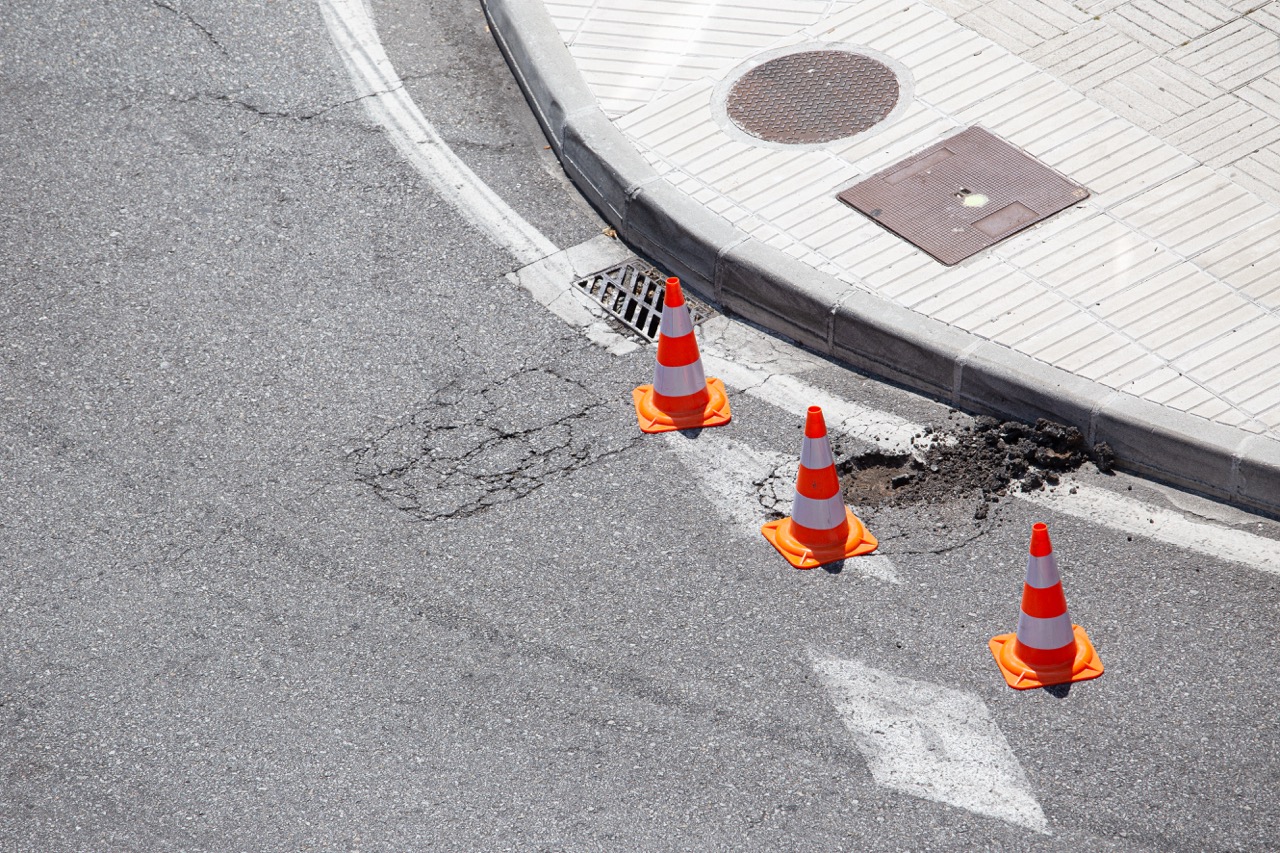
- Utility cut deterioration — settlement at utility trenches
- Subsidence — void development under pavement
Drainage & Surface Condition Distresses
Drainage deficiencies accelerate all other distress types and create liability exposure. Identifying ponding, poor cross-slope, and failed drainage infrastructure is as critical as evaluating the pavement itself.
- Ponding — inadequate cross-slope or failed drainage structures
- Raveling — aggregate loss from binder oxidation or stripping
- Bleeding / flushing — excess binder migration to surface
- Polishing — loss of surface texture and skid resistance
- Pothole formation — advanced cracking and water intrusion
- Failed curb, gutter, and inlet structures
Road & Street Pavement Assessments
Road and street assessments evaluate travel lanes, shoulders, curb and gutter, drainage inlets, and intersection approaches — documenting conditions by pavement section and assigning section-level PCI ratings that allow maintenance to be prioritized by location and severity. For municipalities, HOAs, and counties managing networks of roads, GGE’s section-level assessment produces a pavement management inventory directly usable for capital improvement planning and bond program justification.
- Section-by-section PCI rating and distress mapping
- Curb, gutter, and drainage inlet condition
- Cross-slope and ponding risk evaluation
- Pavement edge and shoulder condition
- Subgrade distress indicators (heave, subsidence)
- Prioritized repair and rehabilitation schedule
Parking Lot & Site Pavement Assessments
Parking lot and site pavement assessments evaluate the full paved area including drive aisles, stalls, loading zones, pedestrian pathways, and ADA-required accessible routes — with particular attention to ADA compliance, drainage ponding risk that creates liability exposure, and the deterioration patterns caused by concentrated truck loading at dumpster pads, delivery areas, and loading docks. For commercial property owners and school districts, the assessment provides the engineering documentation needed for property due diligence, lease negotiations, and deferred maintenance capital planning.
- Full-area condition survey with distress mapping
- ADA accessible route and ramp condition assessment
- Drainage and ponding pattern analysis
- Loading zone and dumpster pad structural evaluation
- Striping and pavement marking condition
- Immediate safety hazard identification (trip hazards, potholes)
The Process
SCOPE & BACKGROUND
Every pavement assessment begins with a direct conversation between the client and GGE — understanding the scope of the paved area, the primary purpose of the assessment (capital planning, pre-purchase due diligence, insurance documentation, HOA reserve study, or repair prioritization), and any known concerns about specific pavement sections. GGE reviews any available as-built drawings, previous assessment reports, pavement construction dates, repair history, and drainage records before mobilizing to the site. Understanding the history of a pavement — what was built, when, and what has been done to it since — is essential for accurately interpreting what the field conditions reveal about root causes of distress.
field survey
GGE technical team walks every pavement section systematically — identifying, classifying, and documenting all observable distresses by type (per ASTM D6433 pavement distress definitions), extent (percentage of section affected), and severity (low, medium, or high). Each distress is photographed with location markers. Cross-slopes and drainage patterns are observed to identify ponding risk, failed curb and gutter sections, and blocked drainage inlets. ADA accessible routes, ramps, and parking stall surfaces are evaluated for compliance and trip hazard conditions. Field data is collected digitally for office processing, with distress locations recorded against the site plan grid for mapping.
data processing
Field data is downloaded and processed through ArcINFO coupled with University of Colorado developed software called PAVER. For surveys integrating directly into civil design, data transfer to the engineering team occurs at this stage.
ANALYSIS
Using field data, GGE calculates the Pavement Condition Index (PCI) for each section using the ASTM D6433 methodology — weighting distress types by type, severity, and extent to produce a single numerical rating that objectively characterizes section condition. More importantly, GGE's PE interprets the distress patterns to identify root causes: distinguishing fatigue cracking caused by subgrade failure from thermal cracking caused by binder aging, identifying clay heave versus traffic-induced rutting, and determining whether drainage deficiencies are contributing to accelerated structural deterioration. This root-cause analysis determines whether the correct repair is a surface treatment, a structural overlay, a full-depth reclamation, or a reconstruction — and is the difference between a repair that lasts and one that fails again in two years.
Why Choose GGE Pavement Assessment Services?
$100M+ CIP Experience
PE-Signed Report
South Texas Expertise
Civil Design Continuity
Captial Planning
Proven Success
frequent QUESTIONS
A pavement assessment is a systematic engineering evaluation of the condition, structural integrity, and drainage performance of existing pavement — roads, parking lots, driveways, and site surfaces. A professional PE-led assessment includes:
- A visual condition survey — walking every pavement section and identifying all observable distresses by type, severity (low, medium, high), and extent
- A Pavement Condition Index (PCI) rating per section — a standardized numerical score on a 0–100 scale that objectively quantifies condition
- Distress mapping — aerial or plan-view documentation showing the location and type of every distress identified
- Photographic documentation — photos of every significant distress, keyed to the distress map
- Drainage pattern observation — identification of ponding locations, inadequate cross-slopes, and failed drainage infrastructure
- ADA accessible route evaluation — trip hazards, surface deterioration at ramps, and parking stall compliance
- Root cause analysis — engineering interpretation of why each distress type occurred
- Prioritized repair and rehabilitation recommendations — organized into immediate, 1–3 year, and 3–10 year categories
- Order-of-magnitude cost estimates — by repair category, for capital planning and budgeting
- A PE-signed written assessment report
A GGE pavement assessment goes beyond a list of what is wrong — it diagnoses why each distress occurred, recommends the repair type that addresses the actual cause, and presents findings in a format that boards, councils, and property managers can act on directly.
The Pavement Condition Index (PCI) is a standardized numerical rating system developed by the U.S. Army Corps of Engineers and codified in ASTM D6433. It scores pavement condition on a 0-to-100 scale based on a systematic survey of distress types, their severity levels, and the percentage of the pavement section they affect. The categories are:
- 85–100 Good: New or near-new condition; routine maintenance only (crack sealing, sweeping)
- 70–84 Satisfactory: Minor surface distress; preventive maintenance treatments (slurry seal, fog seal)
- 55–69 Fair: Moderate distress; rehabilitation warranted (thin overlay, microsurfacing)
- 40–54 Poor: Significant structural distress; major rehabilitation required (structural overlay, mill and fill)
- 25–39 Very Poor: Severe distress; reconstruction likely more economical than rehabilitation
- 0–24 Failed: Complete structural failure; full reconstruction required
In San Antonio and Bexar County, the PCI rating is used by the City’s Public Works Department, TxDOT, school districts, and HOAs to objectively compare pavement conditions across a network, prioritize repair budgets across competing sections, justify capital improvement program line items, document conditions for bond program proposals, and satisfy lender or auditor requirements for infrastructure assessment documentation.
The most valuable aspect of the PCI system is that it allows pavement management decisions to be made on objective engineering data rather than reactive emergency response — catching sections in the “Fair” or “Poor” range where rehabilitation is still economically viable, before they deteriorate to “Very Poor” or “Failed” where reconstruction is the only option at significantly higher cost.
Pavement assessments serve a wide range of clients throughout San Antonio and South Texas — each with distinct needs but a common requirement for independent engineering documentation of pavement condition:
- Homeowners Associations (HOAs): Community roads, parking areas, and driveways represent one of an HOA’s largest capital assets. Periodic pavement assessments establish the engineering basis for reserve fund allocations, justify special assessments to members, prioritize limited maintenance budgets across a network of community roads, and fulfill the documentation requirements of reserve study professionals
- Commercial property owners and investors: Pre-purchase due diligence for acquisitions, documentation of deferred maintenance liability for lease negotiations, and baseline condition reports before construction activities that may damage adjacent pavements
- Municipalities and counties: Pavement management programs, capital improvement planning, bond program justification, annual condition reporting, and documentation for FHWA and TxDOT-funded street projects
- School districts: Campus driveways, parking lots, bus lanes, and accessible routes must meet ADA requirements and support heavy bus loading — conditions that standard parking lot assessments frequently miss
- Industrial and logistics facilities: Heavy forklift and truck loading on yard surfaces, dock approaches, and container storage areas fails standard pavement sections faster than general traffic — requiring assessment methodology calibrated for actual loading
- Property developers: Documentation of existing pavement conditions before a development that will affect adjacent roads, and assessment of pavements that will be accepted as dedications to the municipality
If you are managing pavement that will require repair, replacement, or capital planning in the next 5 years — and you need to defend that plan to a board, lender, or government agency — a PE-signed pavement assessment is the foundational document that makes those decisions defensible.
Pavements in San Antonio and Bexar County are subject to a combination of environmental and site conditions that accelerate deterioration more severely than many other Texas regions. Understanding these factors is essential for correctly diagnosing pavement distress and recommending repairs that address root causes rather than just symptoms:
- Expansive clay subgrades: The San Antonio area sits on highly expansive clay formations — particularly the Austin Chalk and Taylor Marl — that expand significantly when wet and shrink when dry. This differential subgrade movement causes pavements to crack, heave, and settle regardless of surface quality. A pavement placed on an expansive clay subgrade that is not properly stabilized or designed for volumetric change will develop block cracking, longitudinal cracking, and heave within a few years regardless of pavement thickness
- Extreme temperature cycles: San Antonio regularly exceeds 100°F in summer and experiences periodic freeze events in winter. These extreme temperature swings drive thermal expansion and contraction that fatigue asphalt binders, accelerating transverse cracking and surface oxidation
- Concentrated rainfall events: San Antonio’s rainfall pattern features prolonged dry periods punctuated by intense storm events. These events saturate subbase materials that have dried and loosened during dry periods — dramatically reducing load-bearing capacity and accelerating fatigue cracking during the rain period
- Inadequate drainage design: Pavement sections that were designed without adequate drainage lose structural capacity faster, particularly on expansive clay subgrades where moisture content variation is the primary driver of subgrade movement
GGE’s pavement assessments are calibrated to these South Texas conditions — identifying when observed distress patterns indicate expansive clay movement versus thermal fatigue versus drainage-accelerated deterioration, because each failure mechanism requires a fundamentally different repair strategy.
Applying a thin overlay to a pavement that is failing due to expansive clay subgrade movement is like repainting a wall that has a structural crack — it will look better briefly, then fail again faster. GGE’s root cause analysis ensures that repair recommendations match the actual mechanism causing each pavement section to fail.
GGE’s pavement assessment is structured as Phase 1 of a complete pavement management and improvement workflow. The assessment report is specifically designed to support the decisions and documentation that follow the assessment — not to stand alone as an abstract engineering exercise.
The report’s repair prioritization is organized into three planning horizons:
- Immediate (0–12 months): Life-safety hazards (deep potholes, severe trip hazards at ADA routes), ADA non-compliance, and distresses progressing so rapidly that delay will dramatically increase repair costs
- Short-term (1–3 years): Sections in the “Poor” PCI range where rehabilitation is still viable and cost-effective — mill and overlay, full-depth patching, crack sealing at significant sections
- Long-term (3–10 years): Sections currently in “Fair” condition that will require rehabilitation within the planning window, and reconstruction candidates that should be included in a multi-year capital program
Each priority category includes order-of-magnitude cost estimates — not contractor bids, but engineering-based estimates calibrated to current South Texas construction costs — that boards, councils, and property managers can use directly for reserve fund planning and budget justification.
When the assessment identifies conditions requiring engineering design, GGE’s civil engineering team moves directly from assessment into design — preparing pavement reconstruction specifications, drainage improvement plans, subgrade stabilization designs, or ADA compliance upgrades without the client onboarding a separate firm. The engineer who diagnosed the failure is the engineer who designs the fix.
For HOA boards approving reserve fund allocations, for school district boards justifying capital budget requests, and for municipal councils presenting infrastructure programs to constituents, a GGE pavement assessment provides the independent PE-signed engineering foundation that transforms a maintenance discussion into a defensible, budget-ready capital plan.
Our Featured projects