
OFFICE HOURS
Contact us:
- Mon–Fri: 08:00–17:00
OUR BROCHURES
Parcel Rezoning

Service overview
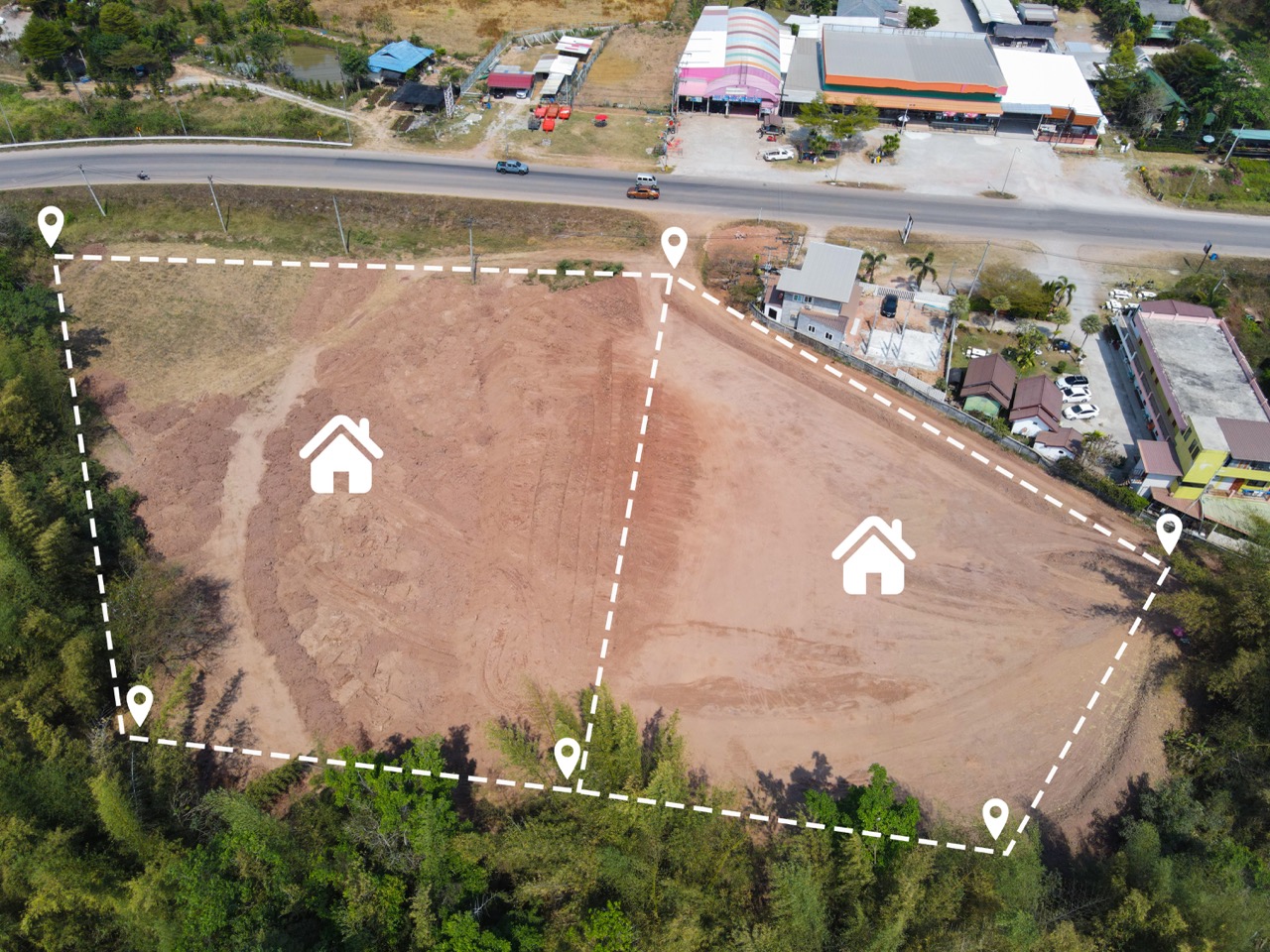
GGE Consulting Engineers provides PE-led parcel rezoning support as part of its Due Diligence practice — guiding residential and commercial property owners and developers through the City of San Antonio’s rezoning process from initial feasibility assessment through City Council approval. Gustavo Gonzalez, P.E. brings a perspective unavailable from any land use attorney or planning consultant alone: 45 years of engineering and public works experience, including direct service as a City Engineer and Assistant City Manager, which means he has evaluated rezoning applications from the agency side and knows exactly how municipal staff and elected officials assess them.
The details
All our services are driven by three core values: Integrity, accountability and reliability. Our Parcel Rezoning Services are amongst the best in the industry across the Austin-San Antonio metroplex and South Texas.
Parcel Rezoning Support for San Antonio and South Texas Property Owners & Developers
Zoning Analysis & Feasibility Assessment
Before investing in a rezoning application, a property owner needs to know whether the request is likely to succeed — and what it will actually cost to pursue it. GGE’s feasibility assessment evaluates the current zoning classification, the adopted neighborhood plan or comprehensive plan designations, adjacent land uses and their zoning, and the history of similar requests in the area.
- Current zoning and UDC district analysis
- Adopted neighborhood and comprehensive plan consistency review
- Adjacent land use and zoning context mapping
- Floodplain and environmental constraint identification
- Comparable rezoning precedent review
- Written feasibility assessment with recommendation
Application Preparation & Engineering Documentation
GGE prepares the complete rezoning application package — combining the planning narrative, engineering supporting documentation, and agency-required technical studies into a single coordinated submission. Unlike firms that handle only the planning narrative and outsource technical components, GGE prepares all engineering documentation in-house: surveys, site plans, drainage analyses, and floodplain determinations.
- Rezoning application form and narrative preparation
- Legal description and boundary data from GGE survey team
- Conceptual site plan development
- Drainage and floodplain analysis (if required)
- Utility availability and infrastructure documentation
- Full submission package coordination and submittal
Agency Coordination & Hearing Representation
Navigating the City’s Development Services Department, Planning Commission, and City Council process requires sustained engagement from pre-application through final vote. GGE manages the coordination with Development Services staff, responds to staff review comments, prepares exhibits for Planning Commission and City Council presentations, and represents the client’s position through the public hearing process.
- Pre-application meeting with Development Services
- Staff comment response and resubmittal management
- Planning Commission exhibit preparation and presentation
- City Council agenda coordination and hearing preparation
- Neighborhood notification and stakeholder coordination
- Post-approval ordinance monitoring and documentation
The Process
FEASIBILITY
GGE begins every rezoning engagement by determining whether the request is feasible before a dollar is spent on application fees or engineering documentation. This involves reviewing the current zoning classification, the City's adopted neighborhood plan and comprehensive plan, the land use context of surrounding parcels, any applicable overlay districts, and the history of similar rezoning requests in the area. The feasibility assessment produces a written opinion — including GGE's recommendation to proceed, modify the request, or pursue an alternative approval pathway such as a variance or specific use authorization.
PREPARATION
Once feasibility is confirmed, GGE prepares the complete rezoning application package. The planning narrative justifies the request against UDC criteria and adopted plan policies. The engineering documentation — prepared in-house — provides the technical foundation: a current boundary survey and legal description, a conceptual site plan showing the proposed use and development footprint, drainage analysis, floodplain determination, and utility availability documentation. GGE coordinates all components before submittal, ensuring internal consistency and reducing the review comment cycles that occur when components come from separate firms.
AGENCY REVIEW
After submittal, GGE actively manages the Development Services staff review process — scheduling direct meetings with the assigned planner and engineering reviewer, tracking the application's status through the review cycle, and preparing written responses to staff comments that resolve objections before they can inform a recommendation of denial to the Planning Commission. GGE also coordinates with the neighborhood association notification process, attending neighborhood meetings as needed to present the application and address community concerns before the formal public hearing. GGE will also meet with the respective Council District staff to seek the Council person stance on the rezoning application. A proactive, engaged approach at this phase is the single greatest predictor of a favorable Planning Commission recommendation.
HEARINGS & APPROVAL
GGE prepares all visual and written materials for the Planning Commission hearing — including the PowerPoint presentation, engineering exhibits, and response to anticipated questions — and attends the hearing to present on the client's behalf or to support the client's presentation. After a favorable Planning Commission recommendation, GGE coordinates the City Council agenda placement, prepares Council member briefing materials, and attends the Council hearing to ensure the application is accurately characterized and approved. Following ordinance passage, GGE provides the client with a complete documentation package including the approved ordinance, updated zoning verification, and a project closeout record.
Why Choose GGE pre-project Consulting Services?
Subject Matter Expertise
45 Years of Experience — Including Running the Agencies That Approve Rezonings
Integrated Engineering
Survey, Civil, and Drainage Documentation Prepared In-House — Not Subcontracted Out
Active Pursuit
GGE Takes an Active and Assertive Approach to Getting Approvals
Floodplain Expertise
FEMA Floodplain Constraints Are the Most Common Rezoning Obstacle — GGE Resolves Them
Multi-Lingual Access
Neighborhood Engagement in English, Spanish, Bengali, and Arabic
Post-Approval Path
Rezoning Is the First Step — GGE Covers the Entire Development Journey That Follows
frequent QUESTIONS
Parcel rezoning is the formal legal process of changing the zoning district classification of a piece of land — from its current designation to a different district that allows the intended use, density, or development standard. In San Antonio, zoning is governed by the Unified Development Code (UDC), which establishes the permitted uses, building setbacks, height limits, lot coverage, parking ratios, and development standards that apply to every parcel within the city limits.
Rezoning is required whenever a property owner or developer wants to use land in a way that is not permitted under the current zoning designation. Common triggers include:
- Converting a residentially zoned parcel to commercial or mixed-use
- Increasing residential density beyond what the current district allows
- Adding non-residential uses (office, retail, light industrial) to a property currently zoned residential
- Changing the character of commercial activity — for example, from neighborhood commercial (C-1) to general commercial (C-3) — to accommodate uses not permitted at the lower classification
- Creating a mixed-use development on a parcel zoned for a single use type
- Aligning a property’s zoning with an adjacent district to reduce the intensity of the zoning boundary
The rezoning process in San Antonio goes through Development Services Department staff analysis, Planning Commission review and recommendation, and final City Council vote — with the approved rezoning enacted by City ordinance and permanently changing the zoning record for the parcel.
In Texas, municipalities have broad authority to regulate land use under Local Government Code Chapter 211. San Antonio’s Unified Development Code governs all zoning within the city, and extraterritorial jurisdiction (ETJ) development is subject to Bexar County regulations rather than city zoning for unincorporated areas — a distinction GGE evaluates as part of every feasibility assessment.
A standard San Antonio rezoning application takes 3 to 6 months from submittal to City Council vote. The process moves through fixed agency review and hearing cycles that run on the Planning Commission’s and City Council’s published meeting schedules, so timeline is determined primarily by when the application enters the cycle, how many review cycles are needed, and whether the application proceeds smoothly or is continued at any hearing.
Factors that extend the timeline beyond the standard range:
- Inconsistency with the adopted neighborhood plan:Applications that don’t align with the applicable neighborhood plan require staff to present the inconsistency to the Planning Commission, which often triggers a continuance while the neighborhood plan amendment is initiated
- Organized neighborhood opposition: Contested applications are frequently continued at the Planning Commission level to allow additional stakeholder engagement, adding 30–60 days
- Incomplete or technically deficient submissions:Applications with missing engineering documentation, inconsistent legal descriptions, or inadequate drainage analyses generate staff comments that restart the review clock
- Complex drainage or floodplain constraints: Applications requiring FEMA floodplain coordination or CLOMR/LOMR submissions have additional federal review timelines outside the city’s control
GGE’s pre-application engagement strategy — consulting with Development Services before submittal, preparing a complete and internally coordinated technical package, and proactively managing stakeholder communication — consistently reduces the number of review cycles and positions applications to move through the process at the shorter end of the timeline.
Before committing to a development timeline or financing that depends on rezoning approval by a specific date, engage GGE for a feasibility assessment. GGE will give you a realistic timeline forecast based on the specific parcel, the requested district, and the current application volume at Development Services — not an optimistic estimate designed to secure the engagement.
The engineering documentation required for a rezoning application in San Antonio depends on the size of the parcel, the requested district, and whether any environmental, drainage, or infrastructure constraints apply. At minimum, nearly every application requires:
- A current survey or legal description of the subject parcel — typically an RPLS-sealed boundary survey meeting Development Services requirements
- A conceptual site plan showing the proposed use, approximate building footprint, access points, and parking arrangement
- Aerial or map exhibits showing the current zoning context and adjacent land uses
Applications for larger commercial rezonings, higher-density residential rezonings, or parcels with drainage constraints typically also require:
- Drainage and stormwater impact analysis — particularly if the site drains to a constrained system or is adjacent to FEMA-mapped floodplain
- Floodplain determination — for any parcel within or adjacent to a FEMA Special Flood Hazard Area
- Utility availability documentation — water and wastewater capacity confirmation from SAWS for significant commercial rezonings
- Traffic impact analysis — for rezonings that would generate significantly more vehicle trips than the current permitted use
- Environmental assessment — if the site has potential contamination history or environmental sensitivity
GGE prepares all of these components in-house — boundary surveys through our licensed RPLS partner, civil site plans and drainage analyses through our PE team, and floodplain determinations using our HEC-RAS modeling capability. This integrated approach means the technical submission package is internally coordinated before it reaches Development Services, reducing the probability of review comments that require re-engagement of multiple consultants.
Incomplete or technically inconsistent engineering documentation is the most common reason San Antonio rezoning applications receive staff comments requiring resubmittal — adding 4–6 weeks per review cycle. GGE’s internally coordinated documentation package is specifically designed to minimize this risk.
These three approval types are frequently confused but address fundamentally different situations:
Rezoning permanently changes the zoning district classification of a parcel, making the new use permitted by right for that property — for the current owner and all future owners. It requires Planning Commission recommendation and City Council approval, and is enacted by ordinance. Rezoning is the right tool when a property owner wants to permanently expand the range of permitted uses or intensities on a parcel.
Variance provides limited relief from a specific development standard — such as a required setback, maximum height, or minimum lot area — without changing the underlying zoning district. Variances are heard by the Board of Adjustment, not the Planning Commission, and are granted only when strict application of the standard would create an unnecessary hardship due to the physical characteristics of the parcel. A variance does not change what uses are permitted; it only adjusts how the physical standards apply in a specific case.
Specific Use Authorization (SUA) — known in other jurisdictions as a conditional use permit — allows a use that is not permitted by right in the current zoning district but is enumerated in the UDC as potentially approvable if specific criteria are met. An SUA runs with the use rather than the land: if the approved use ceases, the authorization lapses. SUAs are appropriate when the intended use is compatible with the surrounding district under the right conditions, but not appropriate enough to be a by-right use.
GGE evaluates which approval pathway is most appropriate, most likely to succeed, most consistent with the client’s development timeline, and least expensive to pursue before recommending an approach. The wrong choice — pursuing a full rezoning when an SUA would suffice, or pursuing an SUA for a use that requires a full rezoning — wastes months and thousands of dollars.
GGE’s feasibility assessment identifies the correct approval pathway before a client commits to application fees. In some cases, the right answer is a combination — an SUA for the immediate intended use while pursuing a full rezoning in parallel to establish permanent entitlement for future development or sale.
Most rezoning applications in San Antonio are prepared by land use attorneys or planning consultants without in-house engineering capability — and most staff objections to rezoning applications are engineering objections: drainage capacity concerns, infrastructure constraints, floodplain impacts, or site access and circulation issues. A planning consultant who lacks engineering expertise must either respond to those objections without technical depth, or add engagement fees and timeline delays while a separate engineering firm is brought in to prepare responses.
GGE’s engineering-first approach addresses this gap in three ways:
- Anticipation: GGE’s PE team reviews the engineering constraints that are most likely to generate staff objections — drainage, floodplain, utility capacity, and site access — before the application is submitted, and prepares supporting documentation that preemptively resolves them rather than waiting for a comment cycle
- Technical credibility: When Development Services staff raise engineering concerns at a Planning Commission hearing, GGE can respond with a licensed PE’s technical analysis rather than a planner’s narrative — which carries significantly more weight with staff, commissioners, and council members who understand engineering risk
- Institutional knowledge: Gonzalez’s background as a former City Engineer means he understands how drainage engineers, utility managers, and public works staff evaluate the technical components of a rezoning application — and frames GGE’s engineering documentation to speak directly to those reviewers’ specific concerns
The result is fewer review comment cycles, more favorable staff recommendations, and a higher probability of Planning Commission and City Council approval without continuances.
GGE’s Capability Statement documents the firm’s philosophy directly: “GGE takes an active and assertive approach to finding answers and getting approvals.” In the context of rezoning, this means GGE pursues approvals with the same technical rigor and proactive engagement that has produced a zero-default, zero-litigation record across 40+ years and $20M+ in professional services.
Our Featured projects